
 Policy papers and recommendations
/ Gaza
Policy papers and recommendations
/ Gaza
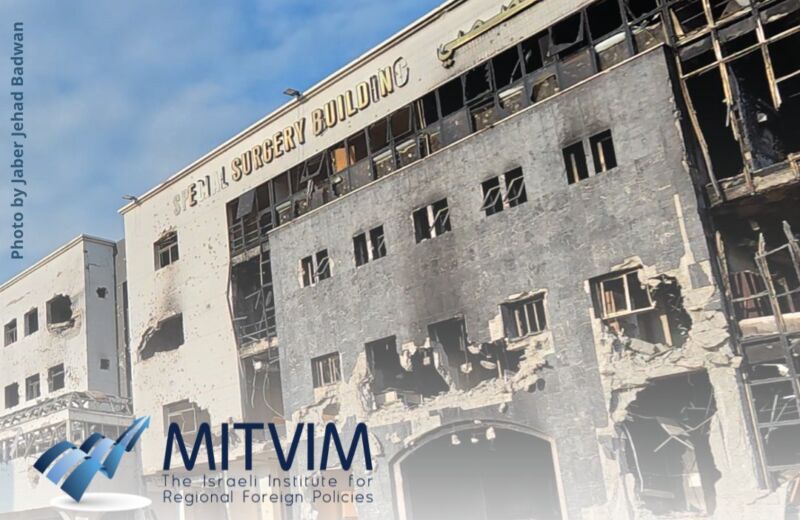
The near-total collapse of Gaza’s health system represents a catastrophic institutional breakdown that simultaneously offers a historic, post conflict window of opportunity to leapfrog from a fragmented, donor dependent system toward a resilient, integrated, and equitable future. By early 2026, the human toll surpassed 72,000 fatalities and 171,000 injuries, occurring against a landscape where 84% of health facilities are damaged or destroyed and the remaining 1,400-bed capacity is critically insufficient for a population of 2.2 million. This strategic framework for Mitvim and SID advocates for a radical shift toward a “Building Forward Better” framework that transcends traditional relief to address the deep-seated political, structural, and environmental determinants of health. Findings reveal a precarious health-risk landscape defined by 61 million tons of contaminated debris and the daily discharge of 130,000 cubic meters of raw sewage, which threatens regional desalination plants and has triggered the re-emergence of variant poliovirus type 2 and West Nile Fever.
Strategic success calls for the establishment of a unified stewardship architecture under a semi-autonomous National Health Council, mirroring successful radical reforms in Kosovo that detached policy setting from direct service implementation to ensure merit-based leadership and professional ethics through independent Medical Chambers.
Service delivery should be rooted in primary health care services where family medicine teams treat 90% of care needs as well as preventive services. It should be supported by the training of non-medical personnel, including teachers and community leaders, as well as for mental health monitoring and the establishment of dedicated community centers for trauma victims.
To bridge the specialized skill gap, it is recommended that the reconstruction will prioritize clinical fellowships for Palestinian physicians and health workforce in trauma, rehabilitation, mental health, oncology, preventive services, while reintegrating experienced health workers through civil society organizations and vocational partnerships.
Immediate stability requires the capitalization of a Financial Intermediary Fund (FIF) to pool the estimated $7 billion needed for recovery and the facilitation of “white-listed” supply chains to bypass dual-use restrictions on life-saving technologies. Infrastructure must shift from a reliance on the fragile centralized grid toward the deployment of off grid, solar-powered medical points and mobile desalination units to ensure service continuity in unstable security environments. Beyond the clinical, environmental security is paramount; we recommend the rapid reconstruction of cross-boundary sewage infrastructure to protect regional water sources and the implementation of the six dimensions of food security, prioritizing local “seeds for health” agriculture and empowering local civil society to lead aid coordination.
The need to ensure a high-quality health system in Gaza presents a historic opportunity to create a system that is more equitable, resilient, and sustainably financed than the one that existed before. The evidence from Kosovo, Rwanda, Germany, and Bosnia and Herzegovina provides a clear roadmap: invest in primary health care and public health services, deploy community health workers, establish universal coverage mechanisms, unify governance, and ensure local ownership of the recovery process. The community’s needs and voice should be heard and used to steer concrete actions, utilizing “good-neighborhood” modalities that treat health as a common denominator and a bridge for peace.
For Israel, the choice is not ideological but pragmatic. Decades of health cooperation demonstrate that cross-border collaboration in public health is not only possible but essential for regional security. The shared environmental ecosystem, the cross-boundary disease surveillance imperative, and the direct threats to Israeli infrastructure from Gaza’s collapsed sanitation system make disengagement a self defeating strategy.
For the international community, the Gaza Reconstruction and Development Fund provide the necessary financing architecture. What is needed now is political will, sustained commitment, and the application of lessons from evidence-based post-conflict reconstruction efforts over the past eight decades. Building forward better is not merely a slogan; it is a strategic imperative for the health, security, and dignity of every person, Palestinian and Israeli, as well as others who share this small, interconnected region.

