
It is Time to Talk About “Electric Peace”
The war with Iran has sharpened the urgent need to protect Israel's energy infrastructure.
The Israeli public views the strikes against the Ayatollah regime through a tactical lens: who was assassinated, which military capabilities were disabled, and when the Iranian missile stockpile
The campaign in the Persian Gulf underscores the urgent need to transition away from oil and gas.
Israelis are closely following the military campaign against Iran: which commanders were eliminated, how much damage was inflicted, and how long Iran can sustain its missile fire. But there is
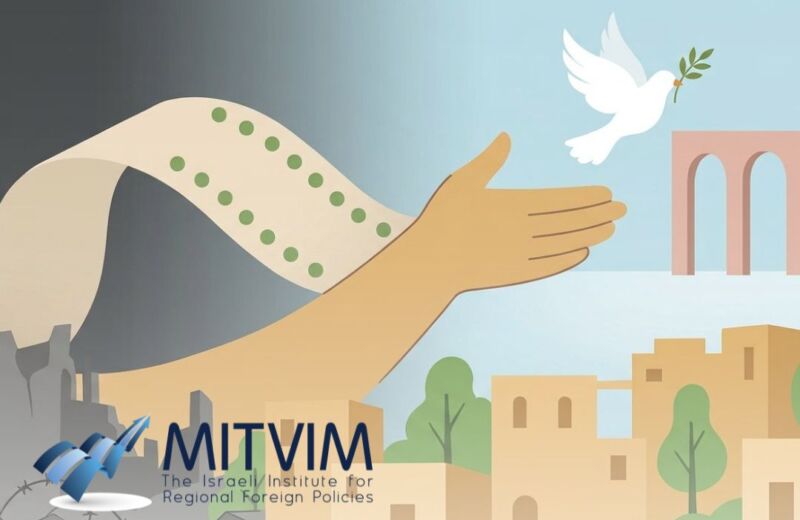
This document focuses on the roles of Israeli and Palestinian civil society (in Gaza and the West Bank) at the present moment, in promoting the necessary transition from war to reconstruction
This paper argues that the reconstruction of Gaza will depend not only on the amount of funding mobilized, but on how financing is structured, governed, and anchored within a broader political context.
This document analyzes the expected scenarios in the Gaza Strip and the anticipated challenges for the technocratic committee’s activity and proposes principles for action and concrete and
As part of the Trump administration’s “20-Point Plan,” the international community is preparing for a large-scale reconstruction of the Gaza Strip. For Israel, this process presents a
This paper argues that the reconstruction of Gaza cannot succeed without Palestinian agency, rights, and meaningful participation. Drawing on comparative experience and field based insights, it
I have dedicated my professional life to strengthening the US-Israel relationship and am very aware of how critical it is to the national security of my country.
Israel’s military successes so far are already generating waves across the Middle East regarding its place on the “day after.”
These cases are not isolated incidents, but rather part of a broader trend reflecting a growing pattern of Israeli involvement in espionage activities on behalf of Iran.
This paper examines the concept of “normalization through strength” through a dual Israeli-Saudi lens.
The twenty-first century confronts humanity with an unprecedented constellation of interrelated challenges and crises – environmental, economic, social, political, technological – that together
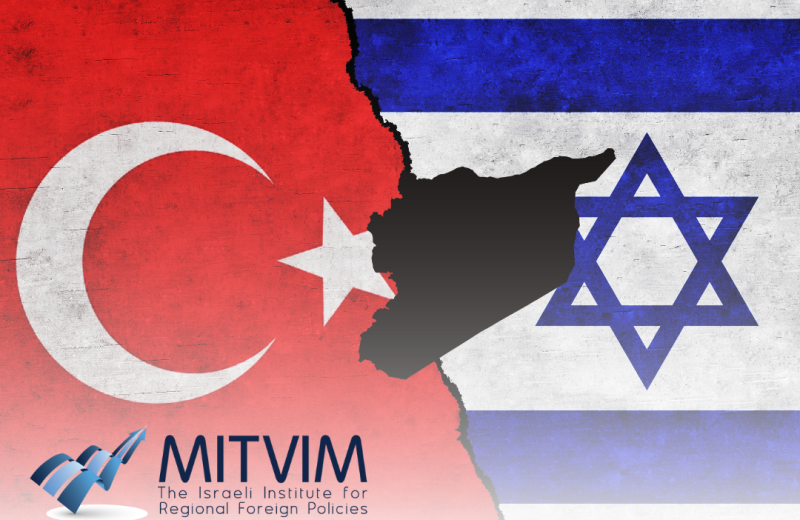
Turkey, Egypt, and Pakistan’s mediation between the US and Iran signals a new regional alignment with implications for Israel’s regional influence.
The ongoing conflict with Iran has not led to acute energy shortages, thanks to a resilient global market and strategic reserves. The U.S. has become energy independent, while the International
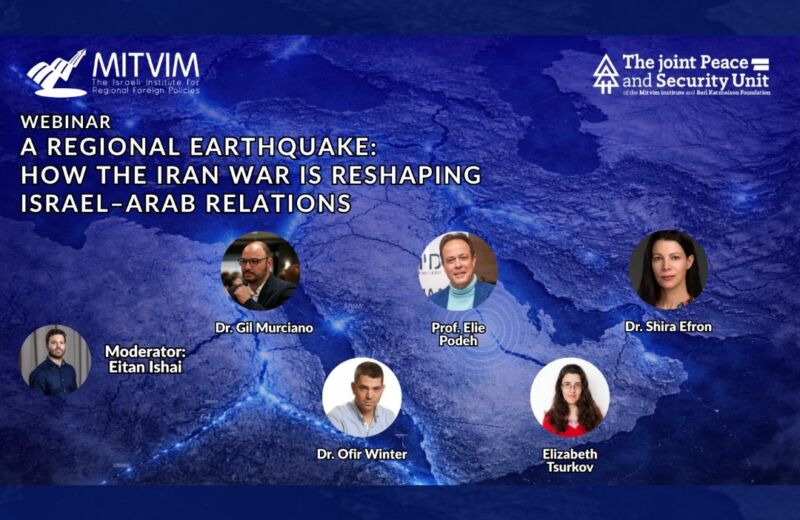
Can military power translate into regional partnerships - or does it deepen mistrust? This question stood at the center of a recent webinar hosted by the Mitvim Institute, titled “A Regional
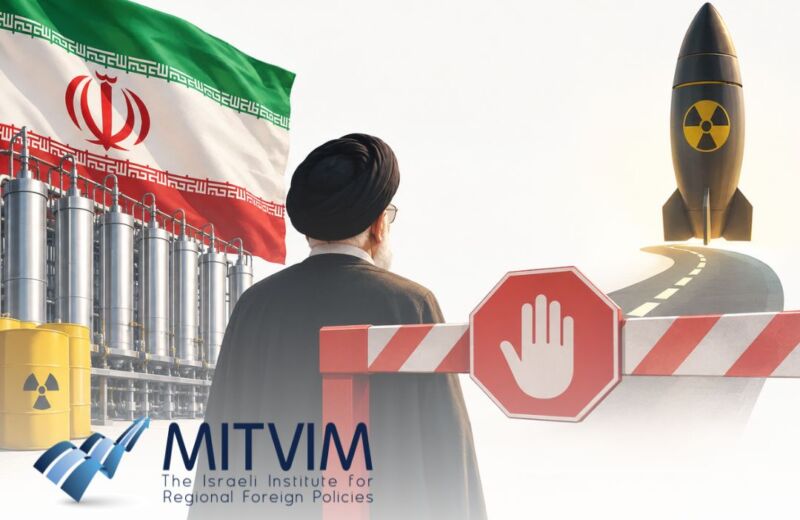
The war between Israel and the United States against Iran began much like the summer 2025 conflict: a campaign of airstrikes and targeted killings directed at Iran, met by Tehran’s missile
You are uniquely positioned to seize this rare diplomatic opening and spare the next generation the threats I grew up with and wars like the one I fought.
Strengthening regional stability in the Middle East is based on moderate Sunni-majority states and Israel's national interests.
Escalation and Reaction in the Middle East’s New Regional War.
Operation Epic Fury is a stress test for the networks of connectivity that have grown over the last decade.
The US twenty-point peace plan that marked the end of Gaza War created an opportunity to break the political stalemate in the Israeli-Palestinian conflict and advance major moves. Yet, progress
Last week, the “Board of Peace” established by President Trump convened in Washington. The week before, Prime Minister Netanyahu announced Israel’s joining of the board (even though this decision
The war with Iran has escalated beyond the U.S-Israel framework, posing a significant threat to the Iranian regime's survival. Iran may adopt a strategy of widening the conflict to pressure the
On February 28, against the backdrop of rounds of talks about a renewed nuclear agreement, Israel and the United States launched a surprise war against Iran. The following are responses from
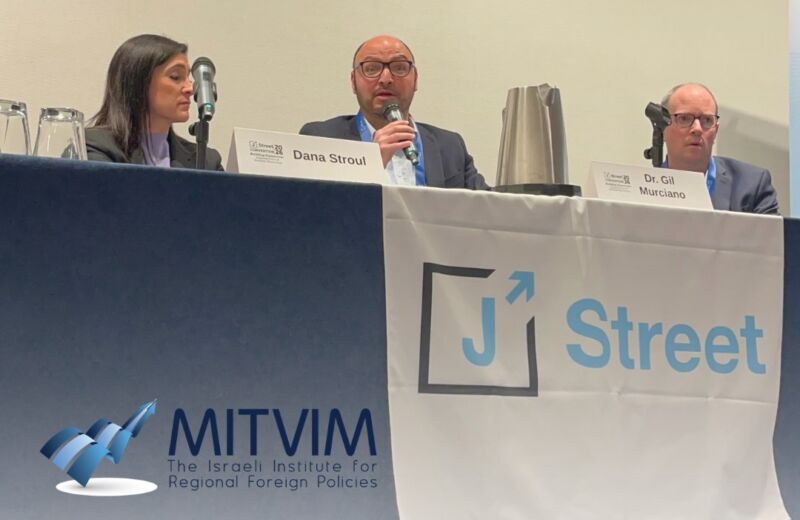
Against the backdrop of the war with Iran and the broader regional escalation, Mitvim Executive Director Dr. Gil Murciano participated in a panel on the implications of the conflict at the J
Circumstances have created an unprecedented situation in which Israel is capable of conducting a campaign against a sworn enemy while the Lebanese state joins it.
Is the goal to weaken Iran’s regime or overthrow it? The answer could determine when and how the war ends.
Circumstances have created an unprecedented situation in which Israel is capable of conducting a campaign against a sworn enemy while the Lebanese state joins it.
The dialogue underscored a central paradox: Israeli–Jordanian relations are simultaneously strained at the political and societal levels and deeply interdependent at the strategic level. The
On February 28, against the backdrop of rounds of talks about a renewed nuclear agreement, Israel and the United States launched a surprise war against Iran. The following are responses from
As long as the present regime remains in power in Iran, there will be no genuine revival of Gulf-Iran relations. Only a new regime could mend the rifts.
This report examines the advancement of electricity interconnections between Israel and both neighboring and more distant countries.
The India–Middle East–Europe Economic Corridor (IMEC) was launched as a transport and connectivity initiative linking India, the Gulf, and Europe. That logic remains relevant, but the post-Gaza
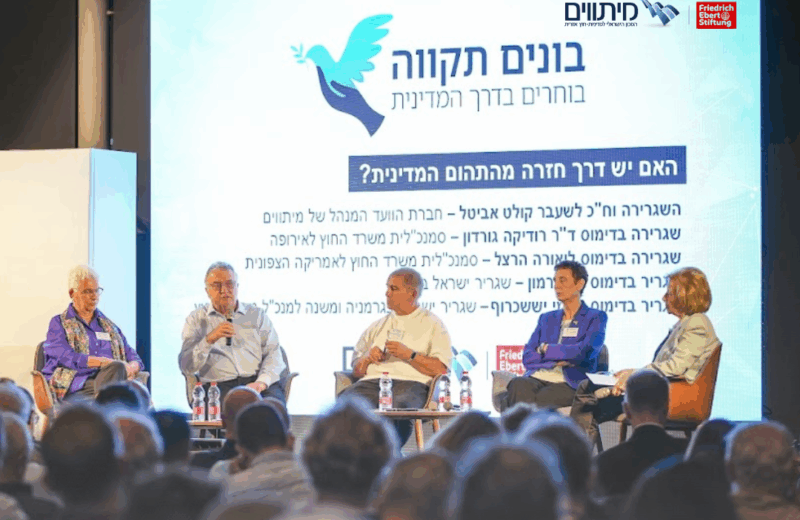
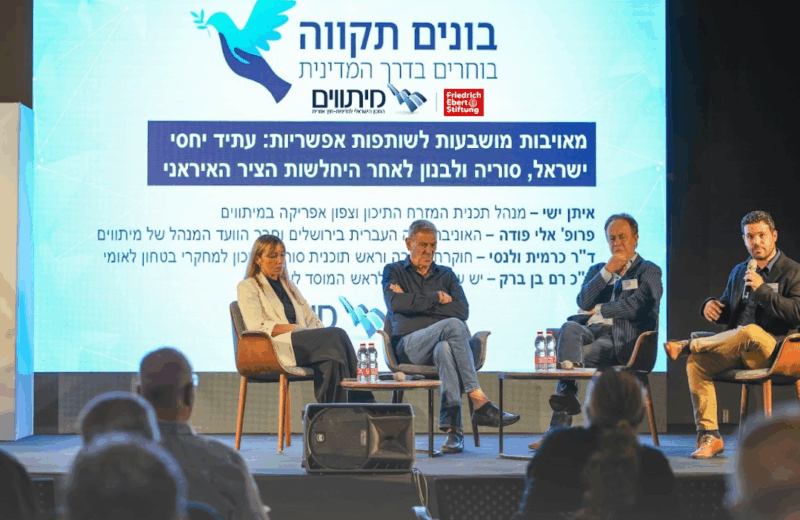
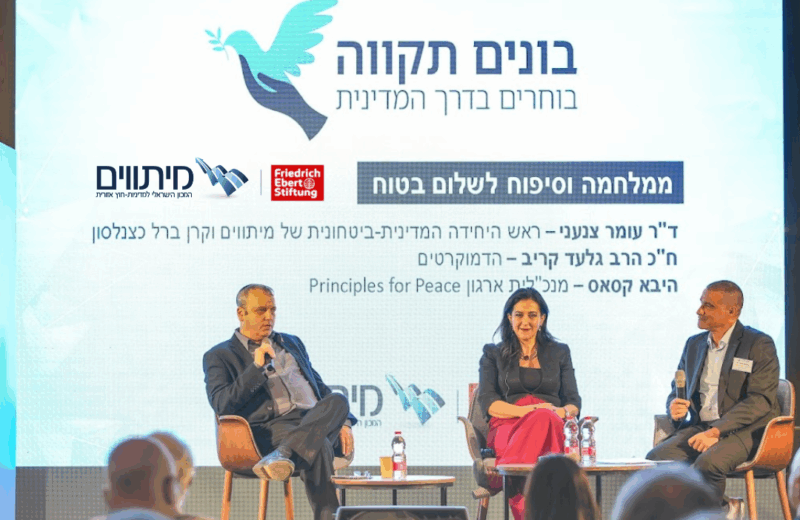
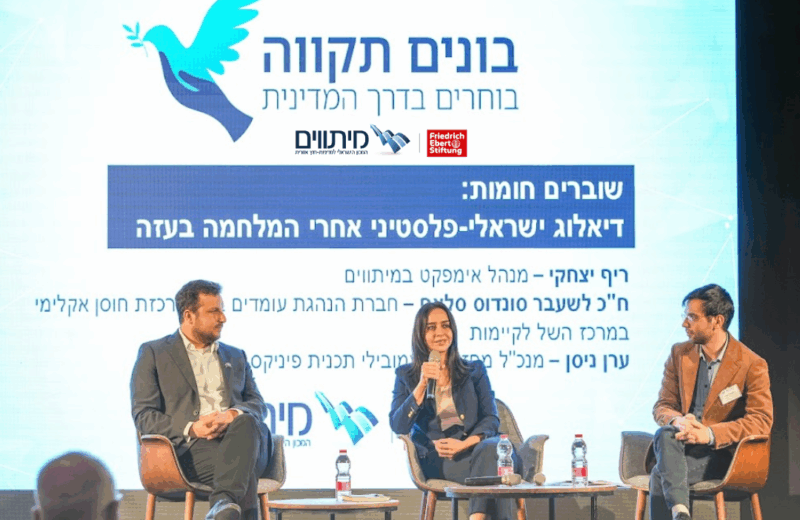
At the 8th Annual Mitvim Conference, held in partnership with the Friedrich-Ebert-Stiftung (FES), over 300 participants from Israel and abroad joined senior diplomatic, political, and civil
This paper analyzes how the October 7 attack and the ensuing multi-front and Gaza war reshaped the region within the broader context of global power competition, inducing intra-Western fractures.
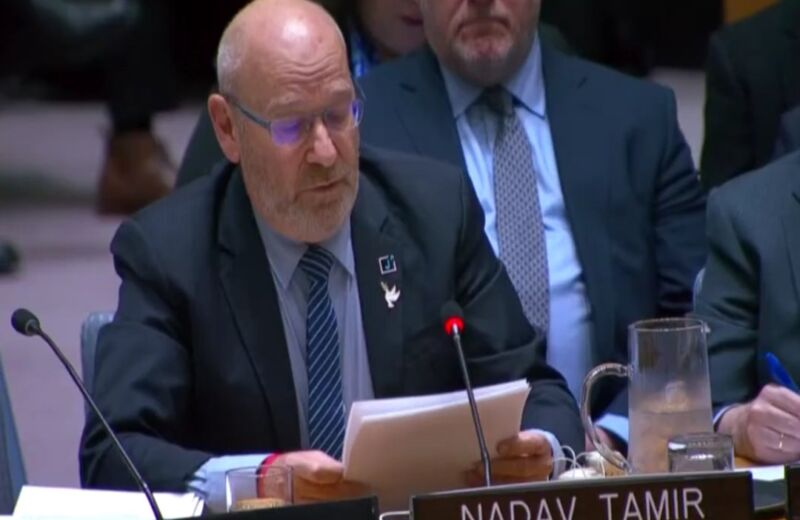
At the invitation of the United Kingdom, currently serving as President of the UN Security Council, Mitvim board member Nadav Tamir delivered a special briefing to Council members alongside Hiba
An economic road map for the Palestinian Authority’s transition from dangerous collapse to stability within regional arrangements
This policy paper examines the relationship between Israel and the Kurdish nation against the backdrop of the dramatic changes in the Middle East since the events of October 7, 2023.
This report sums up the key developments in Israel's regional foreign policy and foreign relations from July-December 2025.
It is unclear why it was necessary to construct such a complex structure to address Gaza’s well-known fundamental problems.
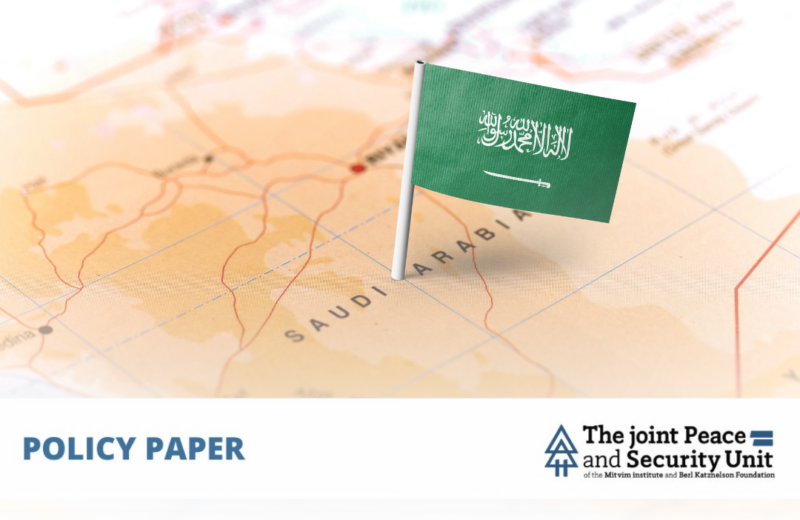
Saudi Arabia holds unique leverage over the conflict's future, but Riyadh needs to choose to engage on all fronts. This is what pro-peace Israelis and Palestinians need it to do.
This document is part of a series of policy papers within a joint project of the Mitvim Institute and the Berl Katznelson Foundation, aimed at thinking about the day after the war.
Farah Bdour on the Endurance of the Jordan–Israel Peace and the Future of the Region
The October 13, 2025 peace summit led by President Donald Trump in Sharm el-Sheikh, as well as other initiatives proposed since October 7, 2023, illustrate Egypt’s vital role in efforts to end
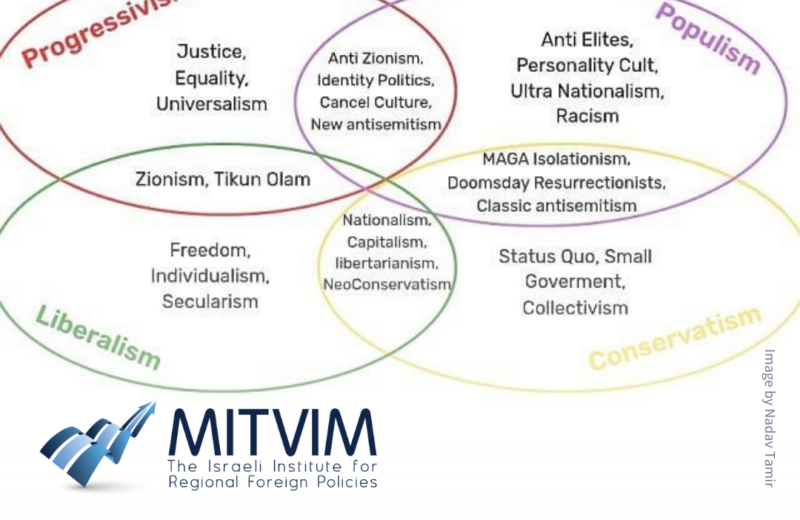
In the past decade, political discourse in the United States has become polarized, loud, and, at times, violent. Concepts that were once clear have become fluid and shifting according to the
These are critical days in the north. The severe blow to Hezbollah and the collapse of the Assad regime have created a diplomatic window for stabilization. This time, the opportunity is not only
The two countries at last have a maritime border, letting energy firms search for new gas fields in the Eastern Mediterranean, but the agreement has geopolitical repercussions too.
On October 7th, Israeli society was significantly altered in light of the unprecedented trauma. As a direct result, the Israeli political system, which has never excelled in developed civil
At this year’s State of Europe event, I had the privilege of initiating and facilitating a dialogue on the evolving dynamics of the Palestine–Israel–Europe relationship — a conversation that felt
This new configuration is not good news for Israel. Its formation is another unplanned consequence of the war.
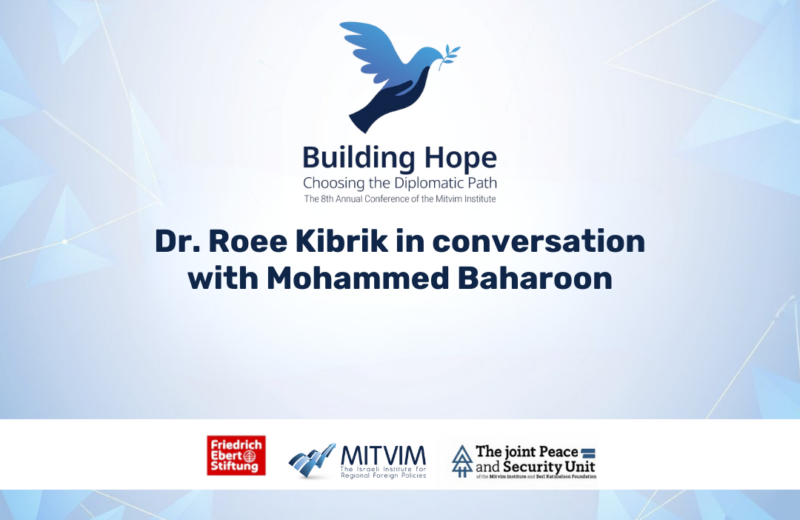
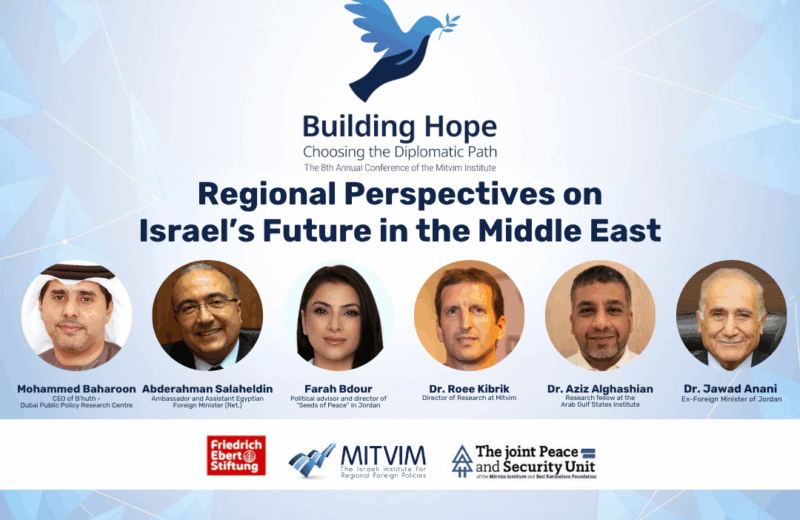
As part of Mitvim Institute’s 8th annual “Building Hope” conference on regional foreign policy, Dr. Roee Kibrik, Director of Research, held an in-depth conversation with Muhammad Baharoon,
Over the past two years of regional turmoil and a devastating war, Dr. Roee Kibrik, Director of Research at the Mitvim Institute, held an in-depth conversation with Ambassador Abderahman
This paper critically examines the potential adaptation of the European Union Coordinating Office for Palestinian Police Support (EUPOL COPPS) as a strategic tool for stabilizing post-conflict
Saudi Crown Prince Mohammed bin Salman's trip to US secured all his primary objectives and left Israel without leverage as a conduit to Washington.
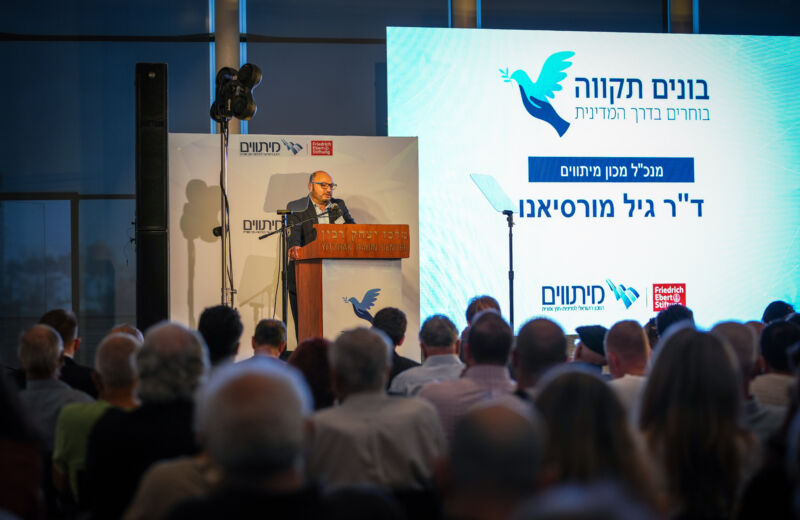
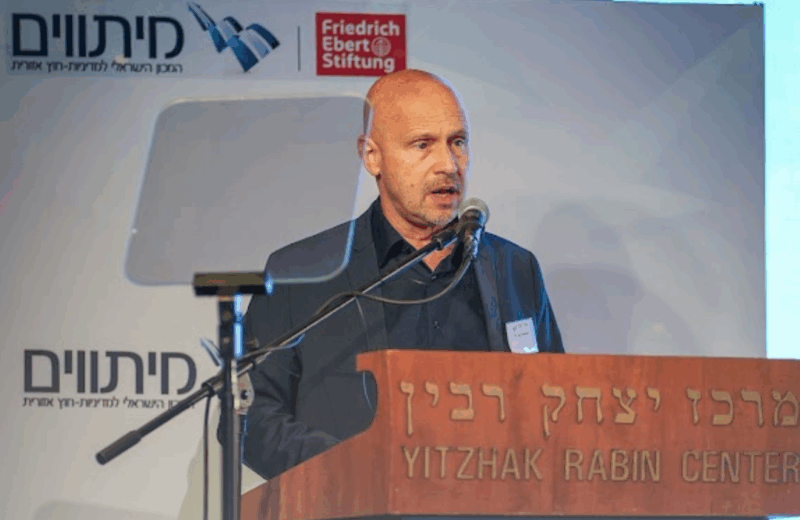
Dr. Gil Murciano, CEO of the Mitvim Institute, in the opening address at Mitvim’s 8th Annual Conference on Regional Foreign Policy, held at the Yitzhak Rabin Center, November 2025, in partnership
“We have never, in all the years of the state, despite grave crises, reached a level of diplomatic isolation and negative global perception like we see today.”
The closing panel of Mitvim’s 8th Annual Foreign Policy Conference, held in November 2025 at the Rabin Center in Tel Aviv in partnership with the Friedrich Ebert Stiftung, focused on Israel’s
Summary of the regional panel moderated by Dr. Roee Kibrik at Mitvim’s 8th Annual Conference on Regional Foreign Policy, held at the Yitzhak Rabin Center, November 2025 | In partnership with
“The Israeli public understands the failure of ‘conflict management.’ There is a public – but it has no leadership that speaks to it clearly.” With this sharp statement, MK Gilad Kariv
The Friedrich Ebert Stiftung cooperates closely, and in a spirit of trust and friendship, with the Mitvim Institute across various lines of work – not only within the framework of the annual
The closing panel of Mitvim’s 8th Annual Regional Foreign Policy Conference - held in November 2025 at the Yitzhak Rabin Center in Tel Aviv, in partnership with Friedrich Ebert Stiftung Israel -
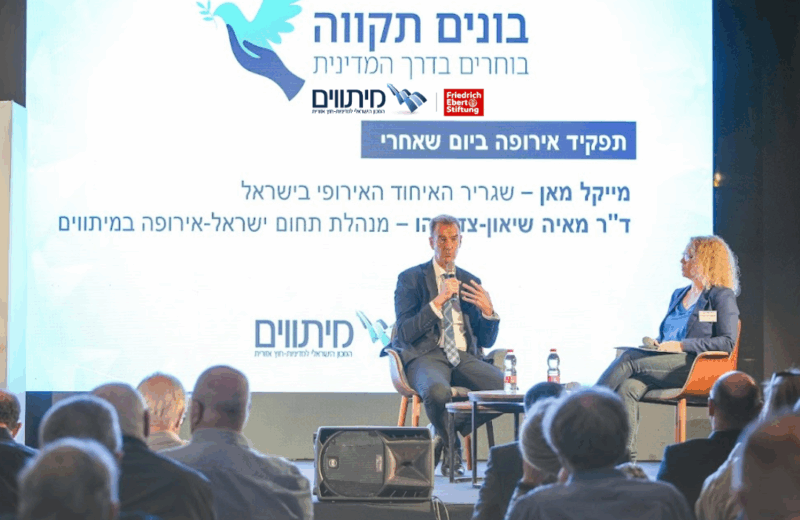
At Mitvim’s 8th Annual Regional Foreign Policy Conference at the Yitzhak Rabin Center in Tel Aviv, Dr. Maya Sion-Tzidkiyahu sat down with Ambassador Michael Mann for a candid conversation on the
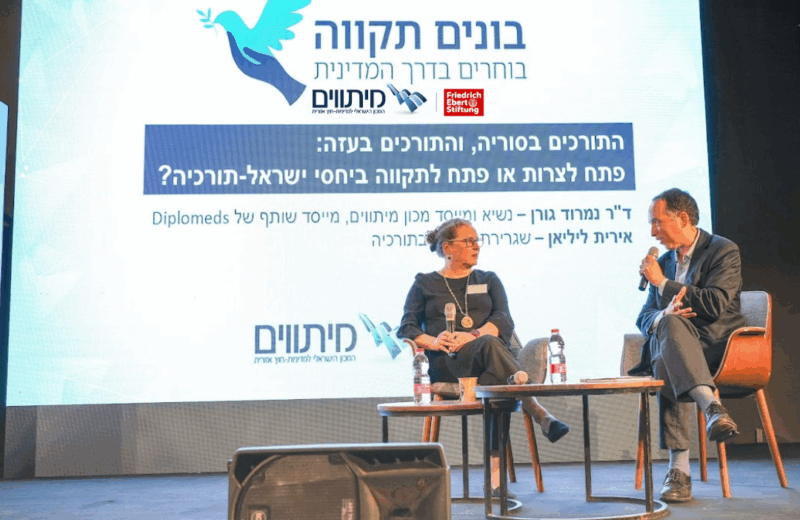
Dr. Nimrod Goren, President of the Mitvim Institute, hosted an open and candid conversation with Irit Lillian, Israel’s Ambassador to Turkey – the most senior Israeli diplomat dealing with the
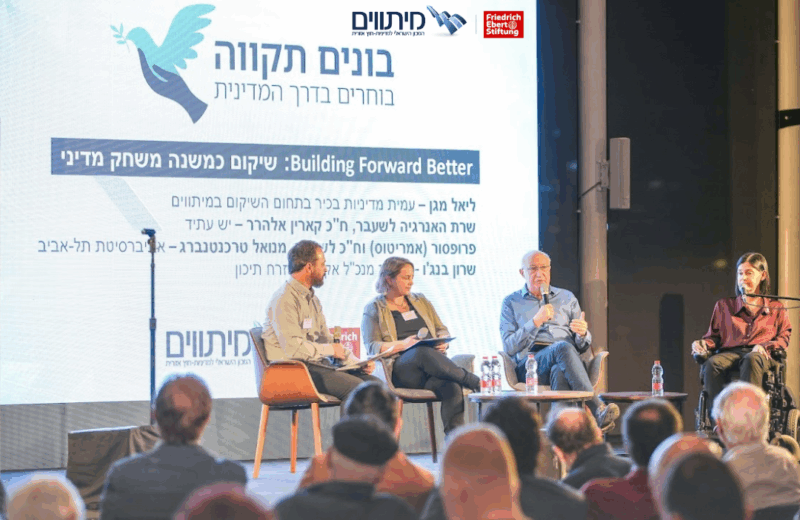
“There will be no political horizon unless we first overcome our internal fractures. Everything is connected,” said Prof. Manuel Trajtenberg in a panel on reconstruction, held at Mitvim’s 8th
The Twenty Point Peace plan seems to promise a brighter future for Gazans and Israelis alike. It envisions a massive reconstruction effort coupled with a process of disarmament, demobilization,
At the 8th Annual Mitvim Conference, held in partnership with the Friedrich-Ebert-Stiftung (FES), over 300 participants from Israel and abroad joined senior diplomatic, political, and civil
Israel’s liberal, centrist politicians have been playing politics by Netanyahu’s rules – and losing because of it.
The cumulative consequences of the Gaza war present the Middle East with a decisive choice – between the continued cycles of violence and destruction and the beginning of a long process of
We are honored to invite you to the 8th Annual Conference of the Mitvim Institute, in collaboration with the Friedrich Ebert Foundation, to be held on November 13th, from 16:00 to 20:00, at the
The problem with Donald Trump’s plan is that it actually consists of several plans without a detailed timetable.
Before the attacks on Oct. 7, Netanyahu had weakened Israel’s foreign ministry and centralized power in his own office, hollowing out the country’s diplomatic apparatus. When the war began,
Contrary to the lies of the coalition and the cowardice of some in the opposition, like Gantz, who portray recognition of a Palestinian state as a “reward for Hamas,” the truth is precisely the
The Israeli Foreign Policy Index of 2025 The 13th annual public opinion survey of the Mitvim Institute on Israel’s foreign policy was conducted in late August 2025. The survey was carried out by
The 13th annual public opinion survey of the Mitvim Institute on Israel’s foreign policy was conducted in late August 2025. The survey was carried out by the Rafi Smith Institute, in
Netanyahu’s policies since Oct. 7 have strained relations with Cairo at the expense of Israeli security.
Israeli decision-makers tend to treat the Abraham Accords as a given. These relationships require ongoing “irrigation and fertilization,” lest they wither away.
Al-Sharaa confirmed the possibility of clinching a deal during a meeting with Arab journalists earlier this month, accompanied by a US push for Israel to cooperate in this regard.
Germany’s reserve towards Netanyahu not only jeopardises the two-state solution, but also Israel’s democratic future.
Like every Israeli child, I grew up with the memory of the Holocaust. My grandmother came to Palestine from Germany as a young Zionist before World War II. Her family, who stayed behind, perished.
This policy paper proposes the formation of a Euro-Arab coalition to stop the Israeli government accelerated de-facto and possibly de-jure annexation of Area C or parts of it in the West Bank,
Israel's military accomplishments should have been leveraged into a political gain.
The massacre of October 7th and the ensuing military campaigns in Gaza, Lebanon, Syria, and Iran did not merely reshape the Middle Eastern political landscape — they also redefined Israel’s role
Discussions aimed at reaching a mutual understanding are vital to preventing miscalculation from either side.
More than a century after Britain first endorsed a Jewish homeland in Palestine, it now stands on the brink of recognizing a Palestinian one. In 1917, the Balfour Declaration marked the first
On July 29th, I joined an emergency press tour organized by Ir Amim, focusing on the planned settlement expansion in E1. The tour came ahead of the plan’s upcoming court hearing on August 6th
This document maps the main trends underlying Israel’s regional foreign policy and foreign relations from January to June 2025, a period coinciding with the first six months of Donald Trump’s
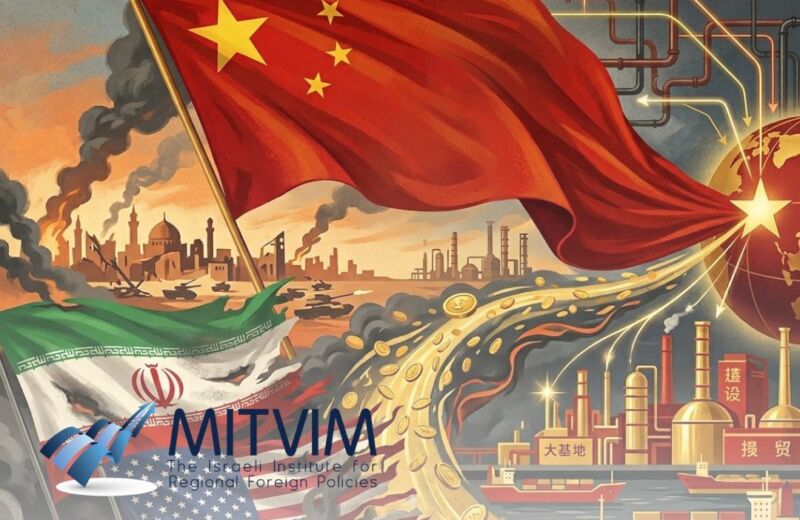
If Israel plays its diplomatic cards wisely, it could redefine its bilateral relationship with China in the wake of the Iran war.
This document maps the main trends underlying Israel's regional foreign policy and foreign relations from January to June 2025, a period coinciding with the first six months of Donald Trump’s
The Israeli Humanitarian Forum for Gaza – which includes Israeli humanitarian and aid organizations such as Mitvim – The Israeli Institute for Regional Foreign Policies – received alarming
After Prolonged Multi-Front Confrontations, Diplomatic Opportunities Emerge
A renewed security agreement between Israel and Syria could lead to a new kind of normalization.
This is a once-in-a-blue-moon opportunity to agree a détente between two hostile neighbours, but getting there is tricky. Several issues must (but can) be overcome.
It overestimates the appeal of military might while ignoring the real motivations that have historically led Arab states to normalize relations with Israel.
SOCAR’s expanding footprint in Israel could eventually open new routes and strategies for future export diversification in the region.
The ceasefire in the war with Iran provides us with an opportunity to draw lessons both for that conflict and beyond it.
Iran’s axis of proxies has taken a serious hit and has become an axis of the weak.
In a special conversation with the Mitvim Institute, Saudi scholar Dr. Aziz Alghashian – a senior research fellow at Mitvim – shares a Gulf perspective on the Israel-Iran conflict, calling for